
Originally featured on eJewishPhilanthropy
Over the past two years, Israel educators have been navigating an increasingly complex landscape, supporting their students through difficult questions, strong emotions and rapidly unfolding events, often without clear road maps or built-in professional communities. At the same time, many educators are seeking opportunities to connect with peers, learn from one another and strengthen their ability to meet this moment.
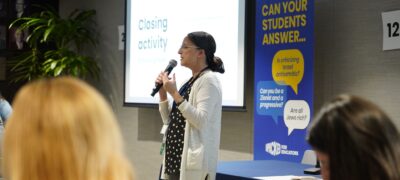
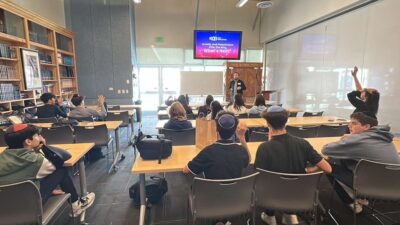
In response to these needs, with the support of Maimonides Fund and Natan Fund, Unpacked for Educators hosted two regional conferences on “Navigating Israel Education in a Changing Landscape.” The first, held in Chicago in partnership with JUF and the iCenter, convened educators from across the Midwest; the second brought together West Coast educators in Los Angeles, in partnership with Sinai Akiba Academy and the Flesh Family Sinai Temple Israel Center.
In total, these gatherings convened nearly 220 Israel educators from day schools, congregational schools, camps and youth groups, spanning the political and religious spectrum. It was incredibly powerful to bring together educators who are often doing this work in isolation and create space for them to learn from one another and feel part of a broader professional community. The feedback from participants was overwhelmingly positive, with many sharing how meaningful it was not only to gain practical tools but also to connect with peers who understand the complexity and importance of this work.
As I reflect on the conferences, several clear themes stayed with me from the sessions, panels and hallway conversations. These moments offered important perspectives on how the field is currently supporting Israel educators and where further growth is needed.
Balancing facts and feelings
At our opening plenaries, Noam Weissman joined Toba Hellerstein, founder of Attune Now, in a conversation on how Israel educators can balance facts and feelings in the classroom. Building on their discussions from “Unpacking Israeli History,” they explored the challenge of teaching Israel in a world where facts do not care about your feelings, but feelings also do not care about your facts.
Since the Oct. 7 attacks, the field of Israel education has made meaningful strides in strengthening students’ factual knowledge, reflecting broader shifts identified in recent research on Israel education. At the same time, a new need has emerged. To truly prepare students with a strong sense of agency in their Zionist identity, we must educate not only for a world of facts, but also for a world of feelings. Students need to know how to listen, empathize and speak in ways that allow their perspectives to be heard, while also being able to hear and sit with perspectives with which they disagree.
These skills are not innate. Like any skill, they must be taught and modeled. This represents an important next stage in the evolution of Israel education, and one we look forward to supporting through an Unpacked for Educators professional development course this summer.
A hub for Israel education
One highlight of both conferences was the opportunity to bring together so many Israel education organizations across the ecosystem. By convening partners such as the Jewish Education Project, M², Hebrew at the Center, the iCenter, Kadima Coaching, IsraelLINK and others, we were able to create a hub where educators could learn directly from leaders across the field. This model allowed educators to access a wider range of expertise and perspectives than any one organization could provide on its own. It also strengthened relationships across organizations, helping build a more connected and collaborative field to support Israel educators.
Creating more opportunities for this kind of collaboration will be essential to strengthening the field of Israel education and ensuring that educators feel supported and equipped to meet the evolving needs of their students.
Israel educators need community
It can often be lonely to be an Israel educator. Each day, Israel educators show up for their learners, teaching a discipline that does not have a clear home within schools, often living somewhere between history and Judaic studies. They must balance deep content knowledge of Israeli and Zionist history with strong pedagogy, the ability to approach nuance and complexity and the capacity to navigate strong emotions in the classroom.
As such, Israel educators benefit greatly from developing professional learning communities to discuss the unique challenges of this field, something increasingly emphasized in recent scholarship. Our regional conference model helped foster this, allowing educators to find community and thought partners in their geographic areas with whom they can continue to collaborate. Bringing together educators from day schools, congregational schools, youth groups and camps allowed us to see both the strength of the broader field and the shared challenges that connect us, even when our work and audiences differ.
At the same time, another important takeaway from the conference is that teaching about Israel cannot be limited to those formally designated as “Israel educators.” While Israel is often taught in dedicated Israel, Zionism or Jewish history courses, students encounter Israel across many areas of their Jewish education, including Tanach, Hebrew, Talmud and social studies. Israel is also part of students’ daily lives beyond the classroom: They are encountering Israeli current events constantly through their phones, social media, and conversations with peers. As a result, educators across disciplines and in mentorship roles are often called upon to help students process what they are seeing and hearing, whether or not they formally “teach Israel.”
When recruiting for the conference, we found that those most likely to participate were educators already formally responsible for teaching about Israel. This underscored the need to encourage more educators across disciplines to take part in these gatherings. Conferences like these provide critical space for educators to gain practical tools, build confidence and learn from peers. Ensuring that a broader range of educators participate in this kind of professional learning is essential to strengthening how students engage with Israel across the educational ecosystem.
The role of Hebrew educators
We were especially encouraged to have a large number of Hebrew-language teachers in attendance and were proud to offer a dedicated session, in partnership with Hebrew at the Center, tailored specifically to their work. The session highlighted the unique opportunity Hebrew teachers have to intentionally integrate Israel education into Hebrew instruction, helping students connect not only to the language, but to Israel as a living, evolving society.
At the same time, conversations with Hebrew teachers and school leaders throughout the conference surfaced some inherent tensions. Hebrew teachers, many of whom are native Israelis, are often asked to serve as cultural ambassadors, bringing Israeli language, culture and lived experience into the classroom. Yet when it comes to navigating nuance, complexity and difficult historical or political questions, there is often a preference for these conversations to take place in history or Zionism courses rather than in the Hebrew classroom.
What role should Hebrew educators play in helping students engage with both the culture and complexity of Israel? How can schools better integrate Hebrew and Israel education so that Hebrew teachers are fully empowered as partners in this work? And how can Israel education organizations better support Hebrew teachers in navigating this responsibility? Answering these questions will be essential to fully empowering Hebrew educators as partners in Israel education.
Israel education’s wide tent
When recruiting for our conferences, we were excited to see educators attending from across the religious and political spectrum. As conversations unfolded between educators with very different perspectives, it became clear that this exchange is one of the field’s greatest strengths.
Israel education creates a unique opportunity, perhaps more than any other area of Jewish education, for educators from different religious and educational settings to come together around a shared subject. In other areas of Jewish studies, ideological and theological differences can sometimes make this kind of collaboration harder. Israel education, however, often becomes a point of connection, creating space for educators from diverse schools and communities to share ideas and learn from one another.
How might we continue expanding this tent and create more opportunities for educators from a wider range of settings to learn together? And how can we ensure that these relationships continue beyond conferences and grow into ongoing collaboration? Doing so will be essential to strengthening the field as a whole.
Bridging the academy and the classroom
For many educators, especially beyond their graduate training, access to current research can be limited, even as the field continues to evolve. Across the conferences, we brought in leading scholars and researchers in Israel education — including Sivan Zakai, Keren Fraiman, Benji Davis and Matt Reingold — and these sessions created meaningful opportunities for educators to engage directly with research and reflect on how it can inform their teaching.
We need to create more opportunities for educators to engage with current scholarship in Israel education. How can researchers and practitioners work more closely together to ensure that research informs classroom practice? And how can we strengthen the connection between those studying Israel education and those teaching it every day? Bridging this gap will be critical to supporting educators in real time.
These two regional conferences made clear how important it is for Israel educators to have spaces where they can connect, learn from one another and grow together. Israel educators are doing complex and important work, and they benefit from opportunities to step outside their classrooms and connect with peers facing similar challenges. Regional gatherings support this work by bringing educators together within their geographic communities, making it easier for relationships and collaboration to continue beyond the conference itself.
Personally, I am excited for the work that lies ahead and for Unpacked for Educators to continue building this field together with the educators and partners shaping the future of Israel education.